Yuguan New Materials-Launches Dedicated Masterbatch for Power Pipes and Cable Protective Sleeves
2020-8-26
MPP and CPVC power conduits are primarily used in high-voltage power engineering. Power conduits, also known as power cable protection pipes or cable protection pipes, can be categorized into open-cut and trenchless types. Among them, MPP trenchless power conduits are also known as MPP pipe jacking.
Cable protection pipes possess a certain degree of mechanical strength, serving to protect cables from damage. They can prevent short-circuit accidents caused by power line disconnections, which could otherwise lead to communication cables and wire ropes becoming energized, thereby protecting cables, switches, and core boards from being burned out. They can also isolate a portion of the magnetic field interference from power lines. Compared to metal pipes, plastic power conduits are lighter, more wear-resistant, and have higher toughness and ductility.
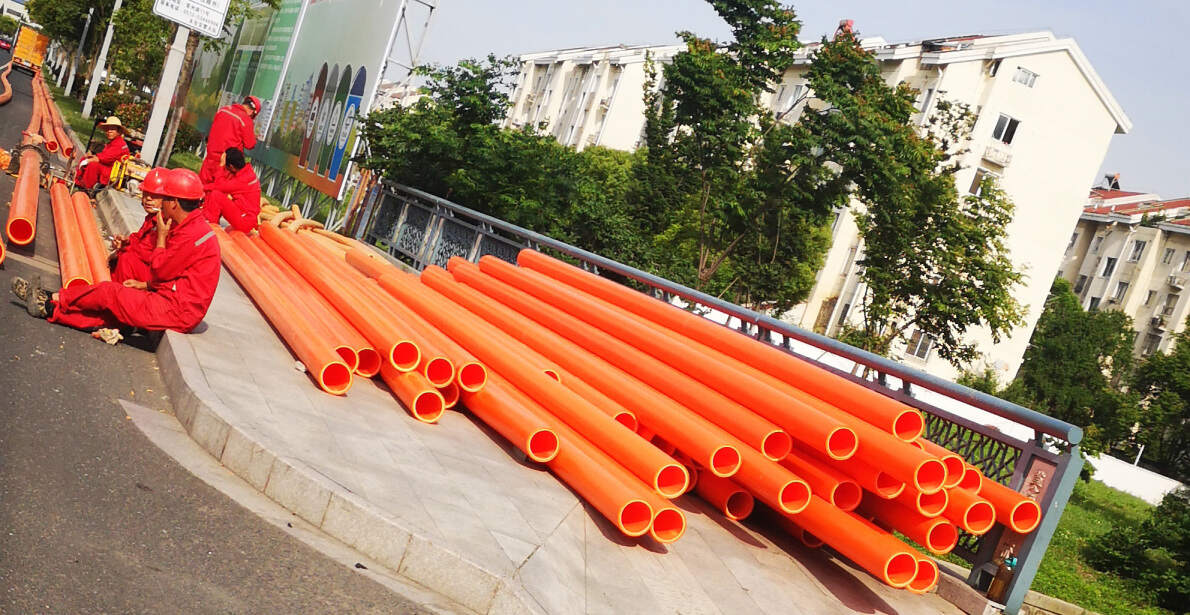
The main material of MPP power conduits is modified polypropylene. They are primarily used in projects involving the laying of pipes and cables in special sections such as roads, railways, buildings, and riverbeds, without the need for extensive excavation that would damage the road surface. Compared to the traditional "trenching and pipe-laying method," trenchless power conduit engineering is more environmentally friendly, avoiding significant construction dust and traffic disruption. MPP and power cable protection pipes are suitable for 10kV high-voltage power cable conduits.
MPP/CPVC cable protection pipes have the following features:
1. Cable protection pipes have high current-carrying capacity and a low coefficient of thermal resistance.
2. The smooth inner wall results in a low friction coefficient with the cable, allowing for easier cable passage.
3. Cable protection pipes extend the distance between manholes and reduce the number of manholes required, saving costs.
4. Excellent electrical insulation performance, ensuring safe and reliable operation, durability, and high compressive strength.
5. High heat distortion temperature and low-temperature impact resistance, allowing for long-term use from -20℃ to 95℃. Pipe brittleness is unlikely to occur during winter construction.
6. Corrosion resistance and long service life. Particularly in coastal areas with high humidity, metal pipes are highly susceptible to corrosion. In acidic and alkaline regions, the service life of anti-corrosion metal pipes is generally within 30 years. Plastic pipes have high corrosion resistance and a service life of over 60 years.
7. Plastic pipes are lightweight, easy to transport, use heat fusion for connection, are simple to install, and easy to maintain.
8. They are recyclable and do not pollute the environment.
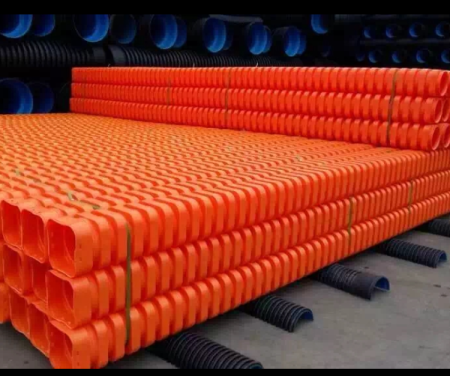
The application scope of cable protection pipes is as follows:
(1) When cables pass through the floors or walls of buildings or tunnels, or when cables are buried indoors or underground, protection pipes should be installed.
(2) When leading cables from trenches to poles and equipment, protection pipes should be installed in areas easily accessible to pedestrians and where the cable section is less than 2m from the ground.
(3) When cables are laid underground or cross roads, protection pipes should be installed.
(4) For cables emerging from cable trays, or in places where it is difficult to install cable trays or where cables are relatively scattered, protection pipes should be installed on the laid cables.